
Introduction
Introduction
Incoming Solar
Activity II Instructions: video explanation
Earth and its Axis
Activity III Instructions: video explanation.
Solar Energy
Activity IV Instructions: video explanation.
Annual Temperatures
Activity V Instructions: video explanation
find your latitude and longitude
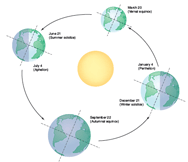 |
The Reasons for the Seasons:
|
Incoming Solar EnergyInstructions can be found at the bottom of the page. Or you can watch this short mp4 explanation. You set the latitude and time of year and the incoming solar energy is calculated throughout the day. The red curve represents the calculation for the conditions set by the left menu bars, the blue curve represents the calculation for the conditions set by the right hand menu bar.
Questions:
This chart plots the incoming solar energy at the top of the atmosphere (no absorption by the atmosphere). You can do this calculation for two locations at once. Select a month, day and latitude from each scroll down menu, and click on calculate. The red curve represents the calculation for the conditions set by the left menu bars, the blue curve is the result for the right hand case. Copyright (2011) Tom Whittaker and Steve Ackerman
|
|